
Lord Sales delivers key AI lecture
Second top UK judge warns of coming "tsunami" of AI-generated claims (AI also being used at one stage of the lecture-writing process)
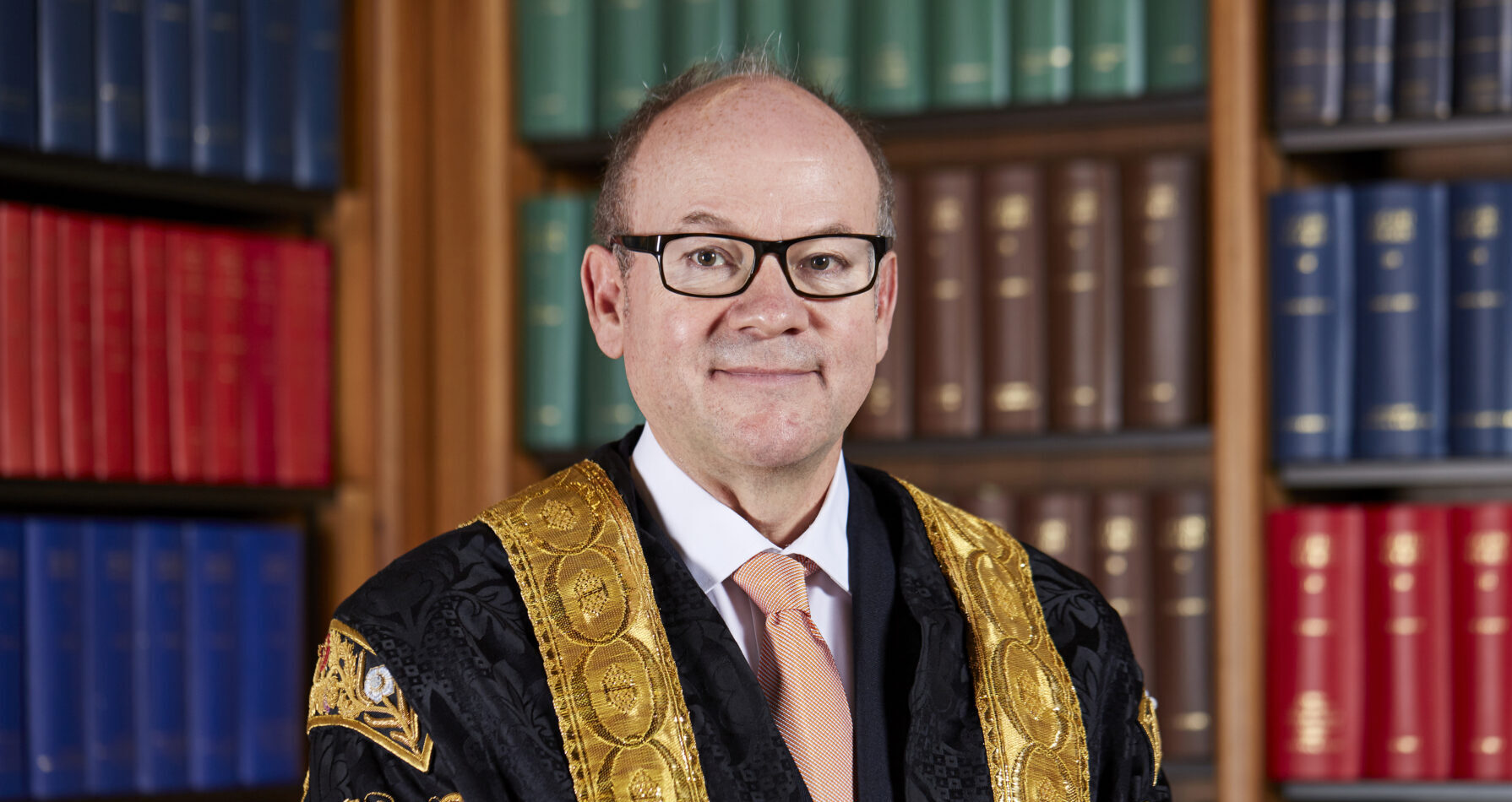
On 18th November 2026, Lord Sales, Deputy President of the Supreme Court, delivered an important lecture on AI.
The lecture addressed:
- AI and the courts;
- AI and the legal profession; and
- AI and the legal process.
AI and the Courts
Lord Sales’ lecture started with reasons for caution (some also having been flagged in other judicial speeches on AI: see Coren Law, UK Courts issue Position Statement on Judicial use of AI (10.10.26)):
- the accuracy of research using AI and LLM’s;
- confidentiality issues (eg. private judicial deliberations being entered into an open AI system); and
- the absence of AI’s constitutional legitimacy.
Echoing a term used by Lord Briggs in May 2026, Lord Sales noted that improved access to AI-sourced claims and AI production of claims: “is already leading to a tsunami of claims”.
Lord Sales also noted that already-struggling Courts were: “likely to face an enormous increase in plausible-looking legal material”.
PI insurers should also be aware of a risk of lawyers doing: “far too much, far too rapidly, without sufficient human discrimination”.
In a key passage headed “AI deciding cases”, Lord Sales argued:
“How should the courts respond to the coming tsunami of claims?
AI may itself have to be enlisted by the courts to become part of the solution. Initially that can occur at relatively uncontroversial levels: administration, document management, summarisation, legal research, routine case management and the organisation of court files.
But if caseload pressures continue to rise, the pressure to go further will be considerable. AI may have to be used to triage cases. It may identify apparently straightforward claims. It may prepare material for a judge. It may produce draft orders. And eventually it may draft judgments.
At that point we confront a question which is uncomfortable but which I think lawyers and judges have to discuss openly: must adjudication always be human?
In an article… about the possible use of AI and its compatibility with article 6 of the European Convention on Human Rights* I have explored the proposition that the answer may not necessarily be yes in all cases.
Article 6 speaks of an independent and impartial tribunal. A tribunal is characterised by its judicial function and by the procedural and substantive guarantees surrounding that function. It is at least arguable that one should not simply insert into the Convention an additional requirement that a tribunal must, in every circumstance, consist of a human being.
That proposition may initially sound startling. But consider a low-value commercial dispute involving no disputed oral evidence and a straightforward issue of contractual interpretation. Imagine an AI system which can determine that dispute in one hour for £50. Imagine that the human alternative costs the parties £20,000 and provides a judgment in 18 months. Society will come to ask, which is better access to justice? The answer is not self-evident.
Article 6 itself includes the right to a determination within a reasonable time. Rights have to be practical and effective rather than theoretical. Speed and cost are not vulgar considerations external to justice. In some circumstances they are important aspects of justice. The existing jurisprudence on digital justice and access to court provides conceptual room for technological procedures where they improve the effective administration of justice.
There may be contexts in which experimentation is easier than others. Parties might voluntarily agree that a particular class of dispute should be determined using AI. Properly informed and voluntary waiver of rights already has a recognised place within the article 6 jurisprudence.
AI might also operate as a specialist first-instance decision-maker subject to review by a human court. Existing Strasbourg jurisprudence recognises that specialist administrative decision-making can be compatible with article 6 where appropriate judicial supervision exists. That suggests an interesting possible model for fields such as regulatory, planning or welfare determinations. Low value civil disputes present another obvious possible field of experimentation. By contrast, more serious criminal proceedings are plainly a very different matter.
So I doubt that the future choice will be between “AI judges” and “human judges”. The more realistic question is how we divide functions between systems and humans at different stages and for different sorts of dispute.”
* Lord Sales, ‘Human Rights, Artificial Intelligence and Judging’ [2026] Public Law 569
Lord Sales went on to highlight the risk of automation bias – the tendency to accept the machine’s answer precisely because the machine usually gets things right.
He added: “True AI competence requires the human being to possess enough independent expertise to know when the machine is wrong”.
AI and the legal profession
Noting that the relevant professional obligation remains the lawyer’s, Lord Sales argued:
“… firms need systems which distinguish at least three things: tasks that may safely be delegated to AI; tasks for which AI may be used but its output must be independently verified; and tasks in which its use may be inappropriate altogether”.
He then posed (more) difficult questions:
“But now consider the question from the perspective of the profession 20 years later. Where does the experienced senior lawyer come from? Who will be the lawyer with the critical faculties required to examine the product which AI generates?…
A law firm which eliminates expensive junior work may improve its productivity this year while quietly failing to generate and develop its own human capital for ten years to come. The judiciary faces the same problem. If judges cease to research, analyse and write because machines increasingly perform those functions, critical faculties will atrophy. If younger lawyers never perform those tasks themselves, the future judiciary may contain people who have never acquired those faculties in the first place.
We might then arrive at the extraordinary situation in which we insist that an AI-generated judgment must be checked by a human, while progressively eliminating the training through which human beings acquire the capacity to check it. That is not a sustainable model.
… Paradoxically, as AI becomes better, some lawyers may need to be trained without it…”.
AI and the legal process
Lord Sales noted that: “We will have arguments about models, datasets, prompts, validation, bias, disclosure and audit trails.”
He argued that the appropriate question was: “For this particular task, subject to these particular safeguards, which decision-making process performs better?…”.
On the role of human judgment, he said this: “We have to find ways to preserve human judgment without turning “human judgment” into an excuse for an inaccessible, unaffordable or intolerably slow justice system.”
On where to draw the line, Lord Sales argued:
“For routine administrative tasks, extensive AI use may quickly become normal. For information management, research and summarisation, the opportunities are considerable, subject to verification and confidentiality. For low-value civil disputes, we may eventually accept forms of automated determination, particularly where parties agree. For specialist administrative or regulatory questions, an AI first decision followed by access to human judicial review may become conceivable. At the other end of the spectrum, decisions involving fundamental rights, serious criminal liability or the development of constitutional principle have much stronger claims to substantive human judgment…
… [T]he sensible unit of analysis may not be the case. It may be the function. We should ask what is being delegated, why it is being delegated, what could go wrong, whether the output is reviewable and who remains responsible.
That is also why the debate cannot be left entirely to judges. Deciding how far human judges should ultimately be replaced by machines is fundamentally a democratic question.”
Conclusions
Lord Sales offered the following concluding thoughts.
“I regard de-skilling as one of the great hidden risks of this technological revolution. The danger is not simply that the machine gets the answer wrong. The greater long-term danger is that human beings gradually lose the ability to know whether it has got the answer wrong. For courts, that means preserving independent judicial judgment and training judges who can exercise it. For law firms, it means maintaining professional expertise even when the immediate economic incentive is to automate its acquisition away. For insurers, it means recognising that AI governance, human competence and professional risk are becoming inseparable. And for the legal system as a whole, it means finding a new accommodation between three things which are all aspects of the rule of law: accessibility, efficiency and human responsibility.
For the decisions which most profoundly affect individuals and society, somebody must remain answerable for the exercise of legal power. For the foreseeable future, that somebody should be a human being. The challenge for lawyers and judges is therefore not to compete with artificial intelligence at the things artificial intelligence can do better. It is to use it intelligently while preserving, developing and demonstrating the value of the things for which human judgment remains indispensable.
If we can do that, AI should not be understood primarily as a threat to the legal profession or to the courts. It can become an extraordinarily powerful servant of the rule of law.
But we should make sure that it remains a good servant, and not our master.”
Note for practitioners: Lord Sales’ speech on AI is a must-read.
Disclaimer: professional advice should be sought before applying any information in a given case.
For advice on Isle of Man civil procedure, legal issues relating to AI, and human rights, contact Coren Law.
See other Coren Law Legal Updates on civil procedure, human rights and AI.
See also Coren Law’s Isle of Man civil procedure portal: Click On | Coren Law.
Photo credit: © The UK Supreme Court
More News
Stay up to date with more of our latest news updates.
JCPC to hear Manx appeals on scope of JCPC jurisdiction
One of the most significant Manx constitutional cases since CB Radio Distributors Ltd in 1983

Isle of Man fraud claims struck out against two parties
High Court in Wilton looks at requirements for pleading fraud & test for striking out fraud claims

Limited re-trial in high-value financial services claims
"Expedition may have to cede to overall fairness": claims now due for re-hearing in September 2027