
Without Prejudice (WP) privilege in Isle of Man litigation
Round-up of Isle of Man case-law on WP privilege

WP privilege in the Isle of Man – general principles
‘Without prejudice’ (WP) privilege operates, in Isle of Man High Court litigation, substantially similarly to England and Wales.
The following guidance, all derived from Isle of Man case-law, will be well familiar to English practitioners too:
[1] “There is a very clear public policy reason for ensuring that parties are free to discuss matters widely on a ‘[WP]’ basis so as to settle their disputes by agreement with peace of mind that, if matters are not resolved by agreement, what they have said in the negotiations, in terms of admissions etc., will subsequently not be used against them”
[2] “… as a general rule ‘[WP]’ communication should be inadmissible in subsequent litigation which concerns the same subject matter. However the rule is not absolute and such material can be looked at when the “justice of the case requires it””
[3] “Even the absence of the words “[WP]” or their equivalent does not remove [WP] status if such is justified”
[4] “… [WP] material is admissible if the issue is whether or not negotiations resulted in an agreed settlement”
[5] “… any without prejudice offers, not made “[WP] Save as to Costs” are not admissible for the purposes of costs, unless the parties agree”
(see references below).
Exceptions to WP privilege
In Unilever PLC v The Procter & Gamble Company [1999] EWCA Civ 3027, Robert Walker LJ (as he then was) identified (at § 23) 8 exceptions to the WP rule:
“(1) … when the issue is whether [WP] communications have resulted in a concluded compromise agreement, those communications are admissible…
(2) Evidence of the negotiations is also admissible to show that an agreement apparently concluded between the parties during the negotiations should be set aside on the ground of misrepresentation, fraud or undue influence…
(3) Even if there is no concluded compromise, a clear statement which is made by one party to negotiations, and on which the other party is intended to act and does in fact act, may be admissible as giving rise to an estoppel…
(4) … one party may be allowed to give evidence of what the other said or wrote in without prejudice negotiations if the exclusion of the evidence would act as a cloak for perjury, blackmail or other “unambiguous impropriety” … [T]he exception should be applied only in the clearest cases of abuse of a privileged occasion.
(5) Evidence of negotiations may be given… in order to explain delay or apparent acquiescence…
(6) In Muller… one of the issues… was whether the claimant had acted reasonably to mitigate his loss in his conduct and conclusion of negotiations for the compromise of proceedings brought by him… Hoffmann LJ treated that issue as one unconnected with the truth or falsity of anything stated in the negotiations, and as therefore falling outside the principle of public policy protecting [WP] communications. The other members of the court agreed but would also have based their decision on waiver.
(7) The exception (or apparent exception) for an offer expressly made ‘[WP] except as to costs’ was clearly recognised by this court…
(8) In matrimonial cases there has developed what is now a distinct privilege extending to communications received in confidence with a view to matrimonial conciliation…”.
Recent English case-law on WP privilege
Recent English case-law has illustrated several points.
(i) Privilege joint and cannot be waived unilaterally
In Sheeran & others v Chokri & others [2022] EWHC 187 (Ch) – a copyright claim relating to Ed Sheeran’s Shape of You – Sir Gerald Barling confirmed (at § 39) that:
“It is not open to one party to without prejudice negotiations to waive the privilege unilaterally. The privilege is a joint one and so can be waived only with the consent of both parties: see Avonwick Holdings Ltd v Webinvest Ltd, at paragraph 21.”
(ii) Privilege limited to negotiations “genuinely aimed at settlement”
In Mornington 2000 LLP & another v Secretary of State for Health and Social Care [2025] EWHC 540 (TCC), Mrs Justice Smith (at § 47 b) cited the following from Rush & Tompkins – v – GLC [1989] AC 1280 at 1301 at 1299G (per Lord Griffiths):
“… The WP Rule… applies “to exclude all negotiations genuinely aimed at settlement whether orally or in writing from being given in evidence””.
She then (at § 66) considered whether an audit report was covered:
“Starting with the public policy justification for the WP Rule, I do not consider that the… Audit Report can properly be said to fall within it. Although there is no doubt that the [WP] negotiations between the parties as to settlement included discussions as to the commissioning of an audit report, I cannot see that the… Audit Report is therefore automatically cloaked in [WP] privilege. It is not itself a statement or offer made in the course of negotiations, it is not a record of negotiations between the parties and it has nothing to do with admissions. It is an independent report commissioned from a third party which does not contain statements from either party. It is very difficult to see how (absent agreement) it could fall within the underlying purpose and objective of the WP Rule of enabling the parties to speak freely.”
But the rationale does not apply in respect of criminal proceedings. See Moore-Bick LJ in R v K (A) [2010] QB 343 (at § 72):
“… the public interest in prosecuting crime is sufficient to outweigh the public interest in the settlement of disputes and therefore that admissions made in the course of “without prejudice” negotiations are not inadmissible simply by virtue of the circumstances in which they were made”.
(iii) Scope of the “unambiguous impropriety” exception
In FW Aviation (Holdings) 1 Ltd v VietJet Aviation JSC [2024] EWHC 1823 (Comm), Christopher Hancock KC followed Males LJ at §§ 10 and 21 in Motorola Solutions v Hytera Communications [2021] QB 744), who had held:
“… the test for admissibility under the “unambiguous impropriety exception” involves both (i) an evidential test, whereby the conduct relied on must be unambiguously proved to have occurred, and (ii) a qualitative test, whereby the conduct must be unambiguously improper in character”.
In Morris v Williams [2025] EWHC 218 (KB), Dodsworth DJ found (at § 19) that the following statement in a WP letter – “The Claimant will admit that he was fundamentally dishonest in respect of some of the representations made in respect of his claim” – was an admission of fundamental dishonesty and also fell within the “unambiguous impropriety” exception.
Oops.
(iv) Scope of the exceptions for: misrepresentation / fraud /undue influence; estoppel; and Muller
In Berkeley Square Holdings & other v Lancer Property Asset Management Ltd & others [2020] EWHC 1015 (Ch), Roth J offered useful guidance on the scope of the exceptions relating to misrepresentation, fraud and undue influence (at § 52); estoppel (§§ 61-62); and Muller (§§ 82-83). For further reading, see Samuel Hodge, Some “Exceptions” to the Without Prejudice Rule (03.06.20).
WP – the Isle of Man employment context
WP issues arise frequently in an employment context.
Key Manx cases considering aspects of the (important) role of the Manx Industrial Relations Service (MIRS) in mediating employment disputes include:
- RL360 Services Ltd v Smith & others (ORD 2017/22) (22.02.18) (§§ 60-78); and
- Seng Hooi Yap v Champion Tech Ltd (by Joint Receivers) (22/42) (01.05.26) (§§ 10 & 116) (see Coren Law, Setting aside a settlement agreement – new EET guidance) (09.05.26)
In a useful piece on WP in a specifically Isle of Man employment context, Beware that tricky end of employment conversation (10.01.23), Advocate John Aycock of M&P Legal draws attention to the following point:
“In England there is statutory provision for a pre-termination discussion whereby those discussions are protected from admissibility in subsequent proceedings, namely [s] 111A of the Employment Rights Act 1996 of Parliament. It was introduced by amendment in England in 2013. It applies only to ordinary unfair dismissal claims not other claims such as discrimination. In the Isle of Man that provision is not applicable and is not included in our Employment Act 2006 of Tynwald. We have the [WP] rule to protect such conversations plus statutory confirmation that conciliation through the Manx Industrial Relations Officer is not admissible in Tribunal evidence.”
References to Isle of Man case-law guidance
[1] Staniforth & another v Dukes Diner Ltd & others (SUM 2010/191) (08.04.11) (High Bailiff Needham at § 8) (see, on the facts, decision on appeal)
[2] Staniforth, above (High Bailiff Needham at § 9) (citing Lord Griffiths in Rush & Tompkins – v – GLC [1989] AC 1280 at 1301) (see also Hoffmann LJ in Forster -v-. Friedland (unrep.), 10 November 1992: “… one party may be allowed to give evidence of what the other said or wrote in [WP] negotiations if the exclusion of the evidence would act as a cloak for perjury, blackmail or other ‘unambiguous impropriety’“)
[3] Ballacorey Wheat Ltd v Barclays Bank plc (2DS 2020/23) (24.09.21) (Judge of Appeal Storey QC & Acting Deemster Le Cocq at § 23, citing Chocoladefabriken Lindt & Sprungli AG v Nestlé Co Ltd [1978] RPC 287))
[4] Ballacorey Wheat above, at § 24, citing Walker v Wilsher (1889) 23 QBD 335, CA. The Appeal Division went on: ” It is therefore appropriate, indeed necessary, for us to examine the [WP] correspondence de bene esse in order to decide whether Barclays is correct in asserting a concluded agreement was made on 31 March 2021.”
[5] Gubay v Willers (ORD 2009/11) (18.04.18) (Deemster Corlett at § 58, citing The White Book (2017 ed) at § 44.3.9., referring to Reed Executive plc v Reed Business Ltd [2004] 1 WLR 3026, CA
Note for practitioners: Isle of Man law on WP remains largely aligned with English law. Recent developments in English law in this area are likely to be persuasive in future Isle of Man Courts.
Disclaimer: professional advice should be sought before applying any information in a given case.
For advice on Isle of Man civil procedure, and employment and equality law, contact Coren Law.
See also Coren Law’s Isle of Man civil procedure portal: Click On | Coren Law.
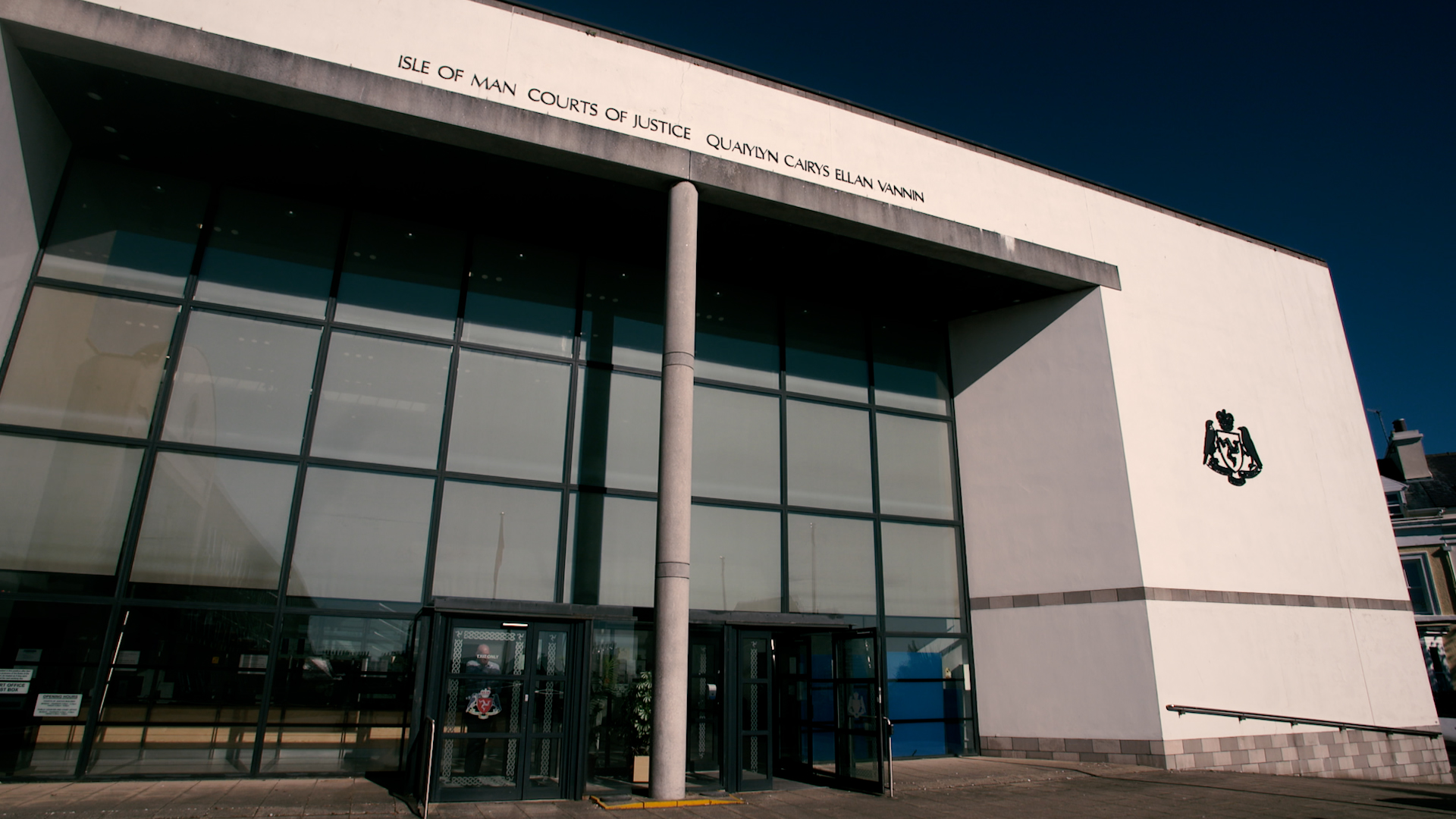
Image credit: Chris F
More News
Stay up to date with more of our latest news updates.

UK Courts issue Position Statement on Judicial use of AI
New Position Statement will be watched closely by practitioners in the Isle of Man

Civil Restraint Orders: Practice & Procedure
Review of High Court's power to make civil restraint orders, following decision in Wilmot
Coren on Coroners: a whistle-stop tour
Round-up of law & practice on Coroners (Manx Court enforcement officers) * process service * arrest & sale of goods / land * Coroners' inquiries * attendance orders