
Use of smart glasses in Court – updates from jurisdictions facing novel threat
And a round-up on guidance on AI & the Isle of Man experience

Witness found to be secretly using smart glasses, whilst giving evidence
In UAB Business Enterprise & another v Oneta Ltd & others [2026] EWHC 543 (Ch) (11.03.26), ICC Judge Agnello KC in the English Chancery Division dealt with a witness alleged to be using smart glasses to communicate secretly with his lawyer, whilst giving evidence in company register rectification proceedings.
The Court was not impressed.
The witness, a Mr Jakstys, giving evidence via an interpreter, seemed to pause “quite a bit” before answering questions. Counsel asked for the witness to remove his glasses, as she could hear interference. It was later ascertained that the witness, whose Lithuanian lawyer (Dr Miliauskas) was attending remotely via video link, was wearing smart glasses. ICC Judge Agnello KC asked the witness to remove the glasses. Here’s what happened next (at §§ 111-114):
“After a few further questions… Mr Jakstys’ mobile phone started broadcasting out loud with the voice of someone talking. There was clearly someone on the mobile phone talking to Mr Jakstys. He then removed his mobile phone from his inner jacket pocket. At my direction, the smart glasses and his mobile were placed into the hands of his solicitor…
When Counsel inspected the smart glasses at the end of the first day’s hearing, they connected to Mr Jakstys’ phone when they were switched on. In the morning of the second day, I directed that the video link was to be switched off.
When asked, Mr Jakstys denied that he was using the smart glasses to receive the answers that he was to give in court to the questions being asked. He also denied that his smart glasses were linked to his mobile phone at the time that he was giving evidence before me. He was asked if he would allow his mobile phone to be checked and in particular the meta data to be checked. He agreed to this. A photo was taken of the screen on his mobile relating to the calls made on 19 January 2026 using the Signal Android system.
Mr Jakstys was in the witness box on the first day from 1.30 pm and then all day on day two of the trial being 20 January. On 22 January 2026, [Counsel], on instructions, informed me that Mr Jakstys had informed him that the day before that he had been robbed of his two mobile phones and his passport. No copy of a police report was produced…
… various calls were made in the morning of 19 January 2026 (first day of trial) to someone which was recorded on his phone as ‘abra kadabra’. When asked who is abra kadabra, [Mr Jakstys] replied that it was a taxi driver….
… Mr Jakstys… called [abra kadabra] again at 13.27, which is just before he went into the witness box at 13.30. Mr Jakstys… was aware that he would start giving his evidence at 13.30… When asked about these calls shortly before he went into the witness box, he simply provided the… explanation… that he wanted to tell the taxi driver that he did not know what time he would finish in court…”
The Court’s conclusions (at §§ 117-118) were unsurprising:
“… Mr Jakstys was being untruthful. … the last call was made within minutes before he went into the witness box. The call log does not make it clear when and if that last call was terminated…. from what occurred in court, it is clear that call was made, connected to his smart glasses and continued during his evidence until his mobile phone was removed from him…
In my judgment, the smart glasses were clearly connected to his mobile phone during his cross examination because no voice was heard out loud until his smart glasses were removed and disconnected from his glasses. [Counsel] submitted that Mr Jakstys was being coached by Dr Miliauskas who was listening to the case on the video link. I accept that the Dr Miliauskas was the person who was on the video link until I stopped it… I accept that Mr Jakstys was being assisted or coached in his replies to questions put to him during cross examination until this was stopped. Not only have I held that Mr Jakstys was untruthful in denying his use of the smart glasses and his calls to abra kadabra, but the effect of this is that his evidence is unreliable and untruthful…”.
Ban on use of smart devices in US Court
Meanwhile, in June 2025, the First Judicial District of Pennsylvania adopted a policy prohibiting the use, without the Court’s permission, of: “ALL CELL PHONES AND OTHER ELECTRONIC DEVICES, INCLUDING, BUT NOT LIMITED TO SMARTPHONES, TABLETS, LAPTOPS, SMART WATCHES, META GLASSES AND OTHER DEVICES WITH RECORDING OR BROADCASTING AND/OR COMMUNICATION CAPABILITIES”. Under the policy, prohibited use may result in sanctions, including punishment for contempt, arrest and prosecution.
In a related update, it has also been reported that, from 30th March 2026, those transgressing this policy may now be liable to arrest.
And in February 2026, a Californian judge, Carolyn Kuhl, presiding over a high-profile social media criminal trial, is reported to have ordered anyone in the courtroom wearing AI glasses immediately to remove them. Judge Kuhl reportedly noted that any use of facial recognition technology to identify jurors was banned.
Recent English guidance on AI more generally
The smart glasses issue can be seen in the wider context of the emerging regulatory framework for the use of AI in Court. In October 2025, the Courts and Tribunals Judiciary produced Artificial Intelligence (AI) / Guidance for Judicial Office Holders. This guidance briefly refers to judicial engagement with evidence (“AI tools may assist, but they cannot replace direct judicial engagement with evidence”). Other recent guidance on AI more generally includes:
- Law Society of England & Wales, Generative AI: the essentials (October 2025);
- General Council of the Bar, Considerations when using ChatGPT or any other generative AI software based on large language models (LLMs) (updated November 2025); and
- Academy of Experts, Guidance for Expert Witnesses on the use of Artificial Intelligence (AI) (February 2026).
In Ayinde v London Borough of Haringey and Al-Haroun [2025] EWHC 1383 (Admin), involving AI-hallucinated citations of authorities by a barrister, Dame Victoria Sharp P stated:
“9…There are serious implications for the administration of justice and public confidence in the justice system if [AI] is misused. In those circumstances, practical and effective measures must now be taken by those within the legal profession with individual leadership responsibilities (such as heads of chambers and managing partners) and by those with the responsibility for regulating the provision of legal services. Those measures must ensure that every individual currently providing legal services within this jurisdiction (whenever and wherever they were qualified to do so) understands and complies with their professional and ethical obligations and their duties to the court if using [AI]. For the future… the profession can expect the court to inquire whether those leadership responsibilities have been fulfilled.”
The President went on to outline the Court’s powers (at §§ 24-25):
“The court has a range of powers to ensure that lawyers comply with their duties to the court. Where those duties are not complied with, the court’s powers include public admonition of the lawyer, the imposition of a costs order, the imposition of a wasted costs order, striking out a case, referral to a regulator, the initiation of contempt proceedings, and referral to the police.
The court’s response will depend on the particular facts of the case. Relevant factors are likely to include: (a) the importance of setting and enforcing proper standards; (b) the circumstances in which false material came to be put before the court; (c) whether an immediate, full and truthful explanation is given to the court and to other parties to the case; (d) the steps taken to mitigate the damage, if any; (e) the time and expense incurred by other parties to the case, and the resources used by the court in addressing the matter; (f) the impact on the underlying litigation and (g) the overriding objective of dealing with cases justly and at proportionate cost.”
The Isle of Man experience
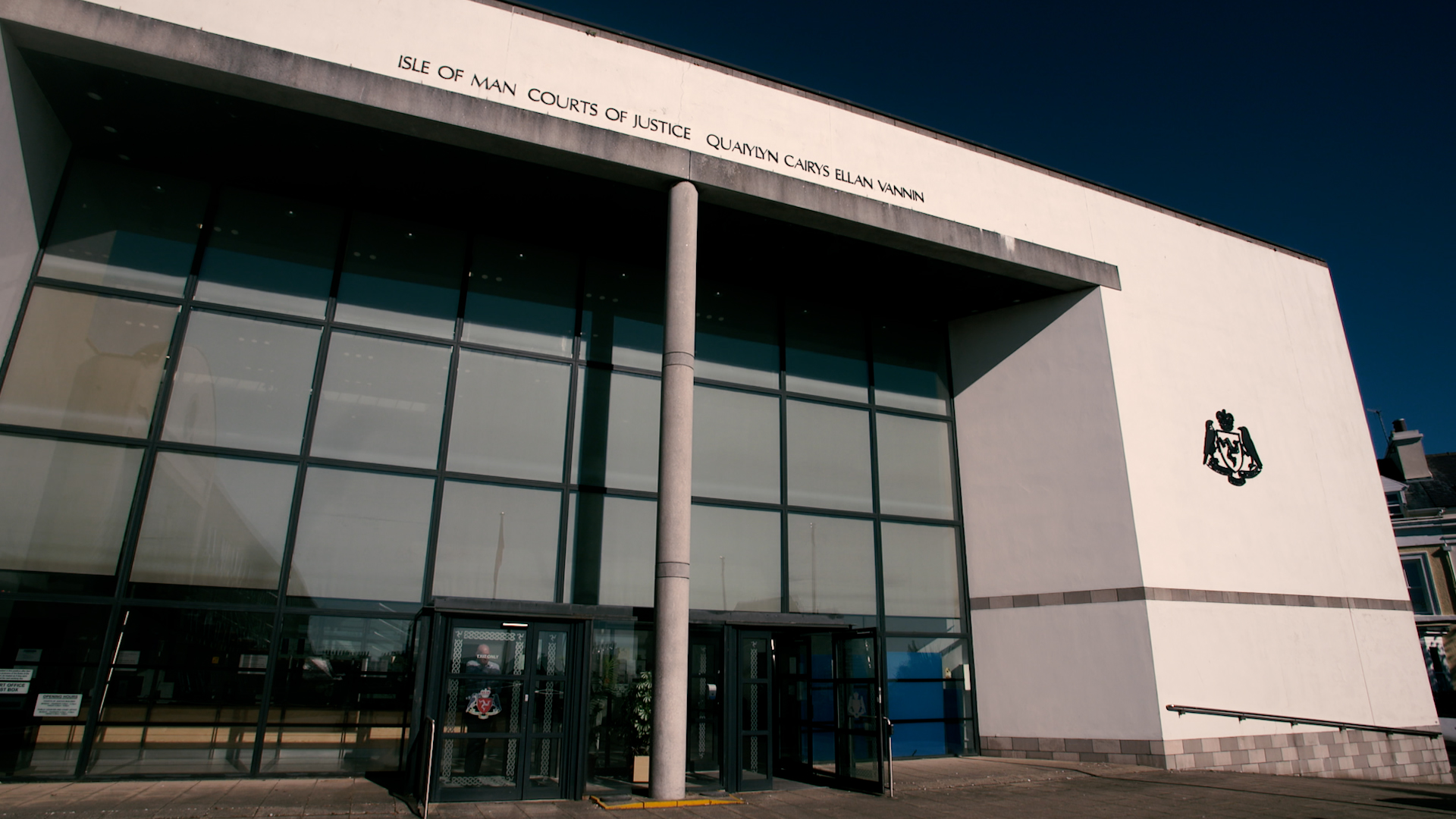
Here in the Isle of Man, under current arrangements, the following may not be brought into the Courthouse:
- “Mobile telephones (mobile telephones may be permitted from time to time, but camera, music playing and recording functions may not be used within the building);
- Audio recording equipment;
- Cameras (unless permission has been granted by a senior manager of the General Registry);
- Equipment for playing music”.
Whilst smart glasses are currently not specifically mentioned in this list, separate 2018 guidance clearly states that: “Items such as video cameras, tape recorders, radios or other electronic equipment are not allowed in the courtroom.”
Manx civil courts already deal with requests to use information and communication technology (ICT) in Court. Guidance, updated in January 2025, covers the use of ICT in Court. Current issues were stated to include:
- “the lack of applications for Judicial approval to adduce evidence via ICT equipment
- lack of early notice of requirements
- out of the ordinary equipment requirements
- operation of equipment”.
One of the Manx Court’s powers to deal with any unauthorised use of smart glasses in Court would be the contempt jurisdiction. In Sodzawiczny v McNally & others (ORD 2021/0028) (29.11.23) (unrep.) – in which Coren Law acted for the Claimant successfully obtaining contempt orders against three Defendants – Acting Deemster Gough noted (at (§ 31):
“There are differences between the law of contempt in this jurisdiction and the law in England and Wales. The law in this jurisdiction derives from the common law, whereas the law of contempt in England and Wales is, in part, governed by statute.”
More recently, a consultation (closing October 2025) proposed a Contempt of Court Bill. This would have provided for various specific statutory examples of “general contempt” (clause 9(1)). Relevant examples included: “disrupting court proceedings whether in the court (including through virtual attendance)” (clause 9(1)(a)); and: “making audio or video recordings of proceedings without permission” (clause 9(1)(g)). (These were examples only).
But could the recent covert use of smart glasses scenario encountered in the English Chancery Division – or some variation of it, involving private, technology-assisted, messaging during cross-examination – really occur here in the Isle of Man?
Interestingly, the Island’s Employment & Equality Tribunal has already had to deal with a witness reported to have sent several private electronic messages to her lawyer. This was reportedly: “at a time when she was giving evidence and should not have been communicating with any other person” (see § 15, below).
At a Tribunal hearing in the Ranson whistleblowing litigation, in January 2022, former interim DHSC Chief Executive Kathryn Magson attended remotely. Ms Magson is reported to have sent a series of electronic messages to her lawyer, whilst Ms Magson was giving evidence to the Tribunal.
According to the subsequent Independent Review (dated 31st January 2024) (§§ 15, 233 and 234), Ms Magson attempted to seek legal advice – mid-evidence – from her lawyer, by sending several private messages to her lawyer in a chat-function on Teams. The issue of this messaging was reported to have been brought, by Ms Magson’s lawyer, to the attention of the Tribunal Chairman, Douglas Stewart.
Once this issue had been raised, Ms Magson is reported as stating that she would not be communicating with her lawyer in the process of being questioned: “if that’s the right thing to do”.
Note for practitioners: Isle of Man Courts, Tribunals and practitioners will need to be increasingly alert to the risk of smart glasses and other devices being used covertly for witness coaching, or covert attempts by witnesses to communicate with a third party, whilst giving evidence. In UAB Business Enterprise, the giveaway was the audible interference. In Ranson, Ms Magson’s lawyer, who was reported to have received the private messages via the chat-function on Teams, alerted the Tribunal. But other attempts may go unnoticed. This issue goes to the heart of what Deemster Corlett called, in Gubay v Willers (ORD 2009/11) (23.12.15), “a cornerstone and central right in our civil justice system” – namely, the “inalienable right of litigants to cross-examine their opponents in order to test their evidence”.
Disclaimer: professional advice should be sought before applying any information in a given case.
For advice on Isle of Man civil procedure, and legal issues relating to AI, contact Coren Law.
See also Coren Law’s Isle of Man civil procedure portal: Click On | Coren Law.
More News
Stay up to date with more of our latest news updates.

UK Courts issue Position Statement on Judicial use of AI
New Position Statement will be watched closely by practitioners in the Isle of Man

Civil Restraint Orders: Practice & Procedure
Review of High Court's power to make civil restraint orders, following decision in Wilmot
Coren on Coroners: a whistle-stop tour
Round-up of law & practice on Coroners (Manx Court enforcement officers) * process service * arrest & sale of goods / land * Coroners' inquiries * attendance orders