
JCPC to hear Manx appeals on scope of JCPC jurisdiction
One of the most significant Manx constitutional cases since CB Radio Distributors Ltd in 1983
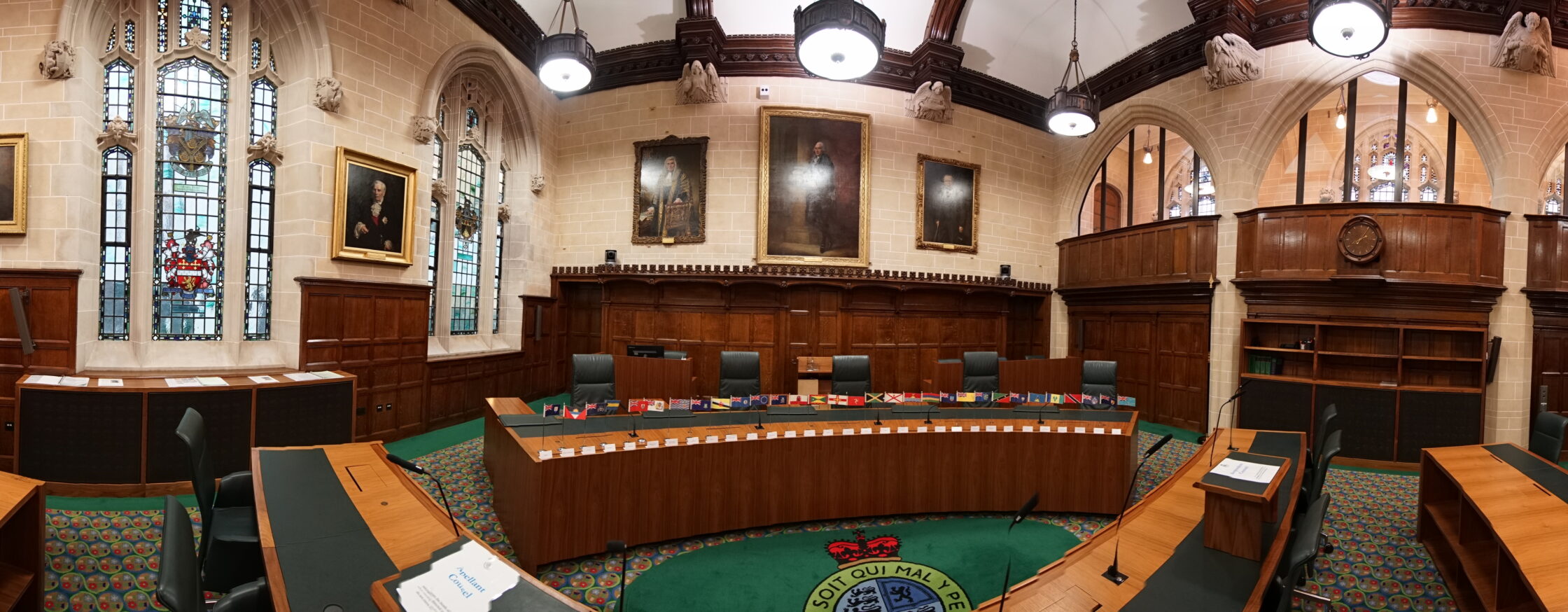
Significant appeals to consider scope of JCPC jurisdiction
Two significant Manx constitutional appeals will be heard together by the Judicial Committee of the Privy Council on 9th-10th December 2026.
On the JCPC’s agenda will be the following issues, raised by two separate appeals being heard together.
JCPC/2026/0008 Paul Anthony Bell (Appellant) v His Majesty’s Solicitor General (Respondent) (Isle of Man) will determine:
- Does the Appeal Division have jurisdiction to grant leave to appeal to the Privy Council pursuant to [s] 24(1)(a) of the High Court Act 1991 if it has refused permission to appeal (to itself) from the High Court?
- Does the JCPC have jurisdiction to grant special leave to appeal in circumstances where the Appeal Division has refused to grant permission to appeal to itself from a ruling of the High Court?
- Did the Deemster err in his construction and application of [s] 21 of the Criminal Justice Act 1991?
Meanwhile, JCPC/2026/0077 Julie Jones (Respondent) v Graeme Jones (Appellant) (Isle of Man) will consider:
- Is there a route of appeal directly from the Isle of Man High Court to the JCPC?
Facts
In Bell, the facts have been summarised thus:
“The appellant… has been the subject of two closely related criminal investigations in the UK and the Isle of Man. The first, … “Operation Braid,” was an investigation into money-laundering and related offences alleged to have been committed by Mr Bell and was conducted by the Isle of Man Constabulary. The second (… “Operation Bannock”), was a UK investigation conducted by [HM]’s Revenue and Customs (“HMRC”) and the Crown Prosecution Service (“CPS”) which centred on offences alleged to have been committed by Mr Bell relating to tax evasion and money laundering. During these investigations, there was mutual co-operation and assistance between the Isle of Man and the UK, part of which involved the issuing of and responding to mutual International Letters of Request (“ILORs”).
Owing to a conflict of interest on the part of the [AG], on 21 November 2014, the Chief Minister directed pursuant to [s] 20 of the… Interpretation Act 1976 that all the functions of the [AG] conferred by statute in relation to Operation Braid… be delegated to a UK barrister (Mr Green KC). On 18 February 2015, a further direction was made pursuant to [s] 20 …, amending the first direction to include all functions conferred upon the [AG] by statute “in relation to Operation Braid and associated matters.” Between 2014 and 2022, Mr Green KC received and responded to a series of ILORs from the UK concerning Operation Bannock.
In June 2023, Mr Bell… raised… the issue whether Mr Green KC had the power to exercise the [AG]’s functions in relation to Operation Bannock or in respect of the ILORs. His solicitors wrote to the [AG]’s Chambers on 27 June 2023 disputing Mr Green KC’s power to respond to the ILORs by virtue of the [s] 20 direction. [HM] Solicitor General (“HMSG”) responded on 4 August 2023, confirming that Mr Green KC was sufficiently empowered to receive and respond to the ILORs by virtue of the direction properly given by the Treasury Minister pursuant to [s] 20 if the Interpretation Act 1976. … [S]he indicated that the enquiries she had undertaken and the information she had received… confirmed that the scope of the direction covered the provision of responses to ILORs in relation to Mr Bell.
… Mr Bell brought a doleance claim against HMSG whereby he sought judicial review of the decision dated 4 August 2023. The principal remedy sought was a declaration that Mr Green KC acted unlawfully when exercising the [AG]’s mutual legal assistance functions in relation to the ILORs concerning Operation Bannock. … Deemster Corlett… dismissed the claim. He held that the power to receive ILORs was provided by [s] 21 of the Criminal Justice Act 1991 (“CJA 1991”) and as that was a statutory function it could properly be the subject of a direction to Mr Green KC under [s] 20 of the Interpretation Act.
Mr Bell sought permission to appeal against the First Deemster’s ruling on the basis that he had erred in his construction of [s] 21 CJA 1991. However, on 1 April 2025, Mr Bell’s application was refused on the papers by Judge of Appeal Cross KC. Following a renewed oral application for permission to appeal pursuant to rule 14.3B(3) of the [RHCJ] 2009, the Appeal Division (Judge of Appeal Cross KC) again refused to grant permission to appeal on 15 May 2025. On 23 June 2025, Mr Bell applied to the Appeal Division for permission to appeal to the [JCPC]. On 8 July 2025 the Appeal Division (Judge of Appeal Cross KC) held that the Appeal Division had no jurisdiction in these circumstances to grant permission to appeal to the JCPC. Mr Bell now seeks permission directly from the Board to appeal to the JCPC.”
In the Appeal Division’s judgment of 8th July 2025, Judge of Appeal Cross KC stated (at §§ 6-7):
“6. The decision of this division to refuse permission to appeal is pursuant to [s] 19A of the High Court Act 1991 [the ‘1991 Act’]. Section 19A(3) of the 1991 Act provides that:
“No appeal may be made against a decision of a judge or court under this section to give or refuse permission …”.
7. There is no provision for an appeal to the JCPC from this decision of the Appeal Division. … [S]ection 19A(3) is designed to achieve finality. The Appeal Division simply has no jurisdiction to grant permission to appeal from its decision refusing permission to appeal. Section 24(1) of the High Court Act 1991 relates only to appeals against orders or judgments.”
In Jones, the Appellant seeks special leave to appeal the decision of Deemster Needham dated 4th July 2025.
A further update on this significant litigation will follow in due course.
CB Radio
The JCPC’s decision in Bell and Jones will be – at least – among the most significant Manx constitutional law decisions since In re CB Radio Distributors Ltd [1981-83] MLR 281 (14.10.83).
CB Radio concerned the Attorney General’s petition for an order to condemn as forfeited goods imported into the Island seized by HM Customs and Excise, in exercise of their powers under an Order made under an Act of Parliament. The appellants’ argument was that the import prohibition had been made pursuant to an Act of Tynwald which was void, due to its conflict with an Act of Parliament, and an Order made under it.
In CB Radio, the Appeal Division (Hytner JA and Deemster Corrin) reviewed the Isle of Man’s constitutional history since Norse times, and held:
“… Whilst the right of the United Kingdom Parliament to legislate may… be a subject for interesting discussion among constitutional historians and lawyers, the issue in our view must now be regarded as academic, because since the inception of the appeal court in the Isle of Man the validity of such legislation has never been questioned but on the contrary has always been recognised and applied. It is now too late to question the right of Parliament to legislate in this manner for the Island, at any rate in this court.
Mr Teare, however, submitted that not only did Parliament have the right to legislate for the Island, but that in relation to any matter where it had done so, Tynwald had no power to legislate itself.
In support of this submission that Parliament must be supreme Mr Teare postulated the difficulties which would arise if neither legislature were supreme and there were a clear conflict between an Act of Parliament and an Act of Tynwald. We can however see no difficulty at all so long as the Lord of Man remains the same person as the United Kingdom Sovereign. Since her consent is required before Acts of either legislature become law, it must follow that the later Act (whether of Tynwald or Parliament) must prevail…”.
Their judgment also appended the opinion of Sir James Gell, Attorney General of the Isle of Man (1868-1898), on the question of the proper constitutional authority to legislate for the Isle of Man and Diocese of Sodor and Man. As the Appeal Division put it:
“The conclusion of Sir James Gell, namely that Tynwald was competent to legislate for the Island and in particular in respect of the Bishopric, was then accepted by the English law officers, and has continued to be accepted by successive United Kingdom governments ever since.”
Further reading
For useful further reading on the JCPC, see:
- Lord Neuberger, The Judicial Committee of the Privy Council in the 21st Century Isle of Man (11.10.13) (a Caroline Weatherill Memorial Lecture, delivered at the Manx Museum); and
- Lady Rose, Same Law – Different Weather: the Significance of Privy Council Decisions for English Lawyers (27.04.26).
See also (covering some of the other constitutional issues raised above):
- Sir Michael Birt, The power of the UK to legislate for the Crown Dependencies without consent—fact or fiction? (13.10.16) (also a Caroline Weatherill Memorial Lecture);
- Prof. Peter Edge, Sovereign/Lord? The enduring legal importance of Revestment (Isle of Man Studies Vol XV 2017); and
- Manx National Heritage, Constitutional History of the Isle of Man.
Note for practitioners: The forthcoming JCPC appeals are, at least, among the most significant Manx constitutional law cases since Re C.B. Radio Distributors [1981-3] MLR 381 in 1983. They will confirm aspects of the scope of the JCPC’s jurisdiction in respect of appeals from the Isle of Man. They will clarify the impact of the introduction of the PTA requirement (via changes to the High Court Act 1991 of Tynwald, as brought into force in December 2024) on the scope of the JCPC’s own jurisdiction.
Disclaimer: professional advice should be sought before applying any information in a given case.
For advice on litigation relating to Isle of Man civil procedure, or on Isle of Man constitutional / administrative law, contact Coren Law.
See other Coren Law Legal Updates on civil procedure, and constitutional and administrative law.
See also Coren Law’s Isle of Man civil procedure portal: Click On | Coren Law.
Photo credit: ChrisVTG Photography
More News
Stay up to date with more of our latest news updates.

Isle of Man fraud claims struck out against two parties
High Court in Wilton looks at requirements for pleading fraud & test for striking out fraud claims

Election petition adjourned pending Onchan vote recount
Supervised recount ordered to take place at secure room at the Isle of Man Courts of Justice

Limited re-trial in high-value financial services claims
"Expedition may have to cede to overall fairness": claims now due for re-hearing in September 2027