
Just my Lux: unlawful means conspiracy claims, after Lux Films
Isle of Man implications, as sole director found capable of conspiring with own company
Director admitted conduct was “a bit naughty”
In a widely-reported judgment in Lux Films Ltd v Fowler & another [2026] EWHC 963 (KB) (24.04.26), Sweeting J recently found a sole director (Andrew Fowler) capable of conspiring unlawfully with his own company (Andrew Fowler Media Limited).
The claim concerned a small media production company (Lux Films Limited). Lux had three directors/shareholders.
After a falling-out it was alleged, amongst other causes of action, that one (“AF”) had conspired unlawfully with his new production company (“AFML”) to damage Lux, for example by diverting clients.
AF described his conduct in “taking business away from Lux” as “a bit naughty”, in light of his status as a director. He added – inaccurately, as it turned out – that it might be: “hard to prove”.
Sweeting J held:
“86. That statement is telling. It reflects an appreciation that his conduct was inconsistent with his obligations to Lux and that its impropriety lay in his continuing office and role. It also reveals an awareness that concealment was necessary to avoid detection. The most plausible inference is that AF understood that he could not lawfully do what he was doing while remaining in office and employed and therefore sought to maintain the benefits of his position while quietly diverting business elsewhere…
140. AF and AFML acted pursuant to a common design whereby AF would misuse his position, confidential information and access to Lux’s resources to divert Lux’s clients and business opportunities to AFML.
141. The unlawful means consisted of AF’s breaches of fiduciary duty, statutory duty and contractual duty, together with the misuse of confidential information and the deception of clients as to AFML’s relationship with Lux.
142. AFML actively participated in that scheme by contracting with diverted clients, invoicing and receiving payment, and holding itself out as the appropriate recipient of work which had previously belonged to Lux.
143. The loss to Lux was the inevitable consequence of the gain to AFML. The combination therefore satisfies the elements of unlawful means conspiracy, notwithstanding that AF controlled AFML…
144. The evidence further supports the conclusion that AFML functioned as the corporate vehicle through which AF carried out and profited from his breaches of duty.
145. Equity does not permit a fiduciary to evade liability by interposing a company under his control. Where a company receives profits made by a fiduciary in breach of duty, the company may be required to account in the same manner as the fiduciary himself.
171. Civil conspiracy… is concerned with the damage caused by concerted action using unlawful means. The focus is therefore on the combination in fact and the resulting injury..
172. … a company and its controlling individual may be capable of conspiring where the company is used as the instrument through which unlawful conduct is carried out. The corporate form cannot be deployed as a shield to defeat liability where it is itself part of the wrongful combination.
173. The decisive question is whether there is evidence of concerted action between two legal persons, even if they are closely connected, rather than whether there are two independent psychological actors. Where a director acts in one capacity to procure unlawful conduct, and in another capacity causes the company to receive and exploit the fruits of that conduct, the requirement of combination is satisfied. In the present case, the evidence supports a clear distinction of capacities and roles.
174. AF, acting in his personal capacity as director and employee of Lux, misused Lux’s confidential information, breached his fiduciary and statutory duties, and diverted business opportunities away from Lux.
175. AFML, acting through AF in his capacity as its director, entered into contracts with diverted clients, invoiced for and received payment, and exploited Lux’s confidential information, goodwill and work product in the course of its business.
176. These were not merely unilateral acts. They were sequential and interlocking steps in a single scheme, whereby AF’s breaches of duty supplied the unlawful means and AFML’s conduct realised the gain. The loss to Lux was the inevitable counterpart of that gain.
177. The fact that AF controlled AFML does not negate the existence of a combination. On the contrary, it explains how the combination operated effectively. AF’s control ensured that the company acted in concert with him to achieve the unlawful objective.
178. AFML further contended that there was no intention to injure Lux. That submission is unsustainable.
179. In an unlawful means conspiracy, an intention to injure is established where the defendants knew that injury to the claimant was the inevitable consequence of the course of conduct pursued for their own benefit. It is not necessary that harm to the claimant be the predominant purpose.
180. Here, AFML’s gain from the diverted business was inseparable from Lux’s loss of that same business and opportunity. AFML could not obtain the benefit without Lux being deprived of it. The requisite intention is therefore made out.
181. … [T]he legal issue raised… that a sole director and his company cannot conspire together, does not defeat the conspiracy claim…
182. Where, as here, a company is used as the vehicle through which unlawful acts are implemented and profits realised, and where those acts cause injury to a third party, the elements of unlawful means conspiracy are capable of being satisfied notwithstanding the unity of control.”
Unlawful means conspiracy in the Isle of Man
Sweeting J’s judgment will undoubtedly be persuasive in the Isle of Man.
Isle of Man law is currently largely aligned with English law on the economic torts, including unlawful means conspiracy.
In an analysis upheld on appeal (at §§ 212 & 234), in Islamic Investment Company of the Gulf (Bahamas) Limited v Cains Advocates Ltd (ORD 2010/53) (06.01.12), Deemster Doyle at §§ 64-70 summarised Manx law on unlawful means conspiracy.
Deemster Doyle started by citing the definition in Clerk & Lindsell on Torts (20th ed 2010) (at §§ 24-95):
“64. … “… where two or more persons combine and take action which is unlawful in itself with the intention of causing damage to a third party who does incur the intended damage. It is not necessary for the injured party to prove that causing him damage was the main or predominant purpose of the combination. But that purpose must be part of the [combiner’s] intention. The main issues raised by this form of the tort are first the degree of intention required and the second the ambit of unlawful means.”
65. Nourse L J in the English Court of Appeal in Kuwait Oil Tanker Co. SAH v Al Bader [2000] 2 All ER (Comm) 271 at page 311 paragraph 108 stated:
“… A conspiracy to injure by unlawful means is actionable where the claimant proves that he has suffered loss or damage as a result of unlawful action taken pursuant to a combination or agreement between the defendant and another person or persons to injure him by unlawful means, whether or not it is the predominant purpose of the defendant to do so.”
66. In Revenue and Customs Commissioners v Total Network SL [2008] 1 AC 1174 the House of Lords… made it clear that it must be proved that the defendant intended to cause the injury or loss in question, although it is not necessary that this was the predominant purpose of the enterprise.
67. Briggs J in The Bank of Tokyo – Mitsubishi Ufj Ltd v Baskan Gida Sanayi Ve Pazalama AS and others [2009] EWHC 1276 (Ch) provided a useful analysis… As can be seen from [§] 825… there is a continuing requirement… to demonstrate an intent by the defendant to injure the claimant. At [§] 836 Briggs J refers to the judgment of Toulson L J in Meretz Investments NV v ACP Ltd [2008] Ch 244 at 289 [§] 174 where Toulson L J stated:
“… a defendant should not be liable for a conspiracy to injure by unlawful means if he believes that he has a lawful right to do what he is doing.”
68. Briggs J at [§] 838 of his judgment in… Bank of Tokyo … referred to the mental element required in the defendant’s conduct for the purposes of unlawful means conspiracy. Briggs J referred to a judgment of Lord Scott as follows:
“In summary, blind-eye knowledge requires, in my opinion, a suspicion that the relevant facts do exist and a deliberate decision to avoid confirming that they exist. But a warning should be sounded. Suspicion is a word that can be used to describe a state-of-mind that may, at one extreme, be no more than a vague feeling of unease and, at the other extreme, reflect a firm belief in the existence of the relevant facts. In my opinion, in order for there to be blind-eye knowledge the suspicion must be firmly grounded and targeted on specific facts. The deliberate decision must be a decision to avoid obtaining confirmation of facts in whose existence the individual has good reason to believe.”
69. Briggs J added… at the end of [§] 841…:
“… the imposition of liability for what is not otherwise actionable requires a high degree of blameworthiness on the part of the defendant. The decision is also a useful reminder of the need to avoid jumping from a perception that a witness is a liar to a conclusion that he must have believed in the likelihood of the unwelcome facts into which he did not inquire.”
70. [In] … Barlow Clowes v Eurotrust 2005-06 MLR 112 [,] Lord Hoffmann… at [§] 10 referred to the concept of knowledge in the context of liability for dishonest assistance. Lord Hoffmann indicated that such knowledge could be knowledge that the transaction is one in which one cannot honestly participate… or it may consist in suspicion combined with a conscious decision not to make enquiries which might result in knowledge.”
In Hillberry Trust Company Ltd v Gautrey & another (ORD 2018.13) (21.01.21), Deemster Corlett at § 52 added that: “conspiracy is… actionable only where loss can be proved. Loss is integral to the cause of action”.
And in VTB Bank (PJSC) & another v Mazurov & others (ORD 19/0042) (28.05.26) – see The “ancient” Fraudulent Assignments Act 1736 reviewed by Isle of Man High Court in Mazurov – Coren Law – Deemster Corlett at § 102 referred to, and applied, the following dictum from JSC BTA Bank v Khrapunov [2018] UKSC 19) (per Lord Sumption & Lord Lloyd-Jones at § 10):
“What is it that makes the conspiracy actionable as such? To say that a predominant purpose of injuring the claimant in the one case and the use of unlawful means in the other supply the element of unlawfulness required to make a conspiracy tortious simply restates the proposition in other words. A more useful concept is the absence of just cause or excuse… A person has a right to advance his own interests by lawful means even if the foreseeable consequence is to damage the interests of others. The existence of that right affords a just cause or excuse. Where, on the other hand, he seeks to advance his interests by unlawful means he has no such right. The position is the same where the means used are lawful but the predominant intention of the defendant was to injure the claimant rather than to further some legitimate interest of his own. This is because in that case it cannot be an answer to say that he was simply exercising a legal right. He had no interest recognised by the law in exercising his legal right for the predominant purpose not of advancing his own interests but of injuring the claimant. In either case, there is no just cause or excuse for the combination”.
Note for practitioners: Lux Films establishes that a sole director may be found capable, in an unlawful conspiracy claim, of conspiring with the company of which he is director. Interposing a company under his control does not enable a fiduciary to evade liability. Lux Films is likely to be followed in the Isle of Man.
Disclaimer: professional advice should be sought before applying any information in a given case.
For advice on litigation relating to Isle of Man company law or civil fraud, contact Coren Law.
See also Coren Law’s Isle of Man civil procedure portal: Click On | Coren Law.
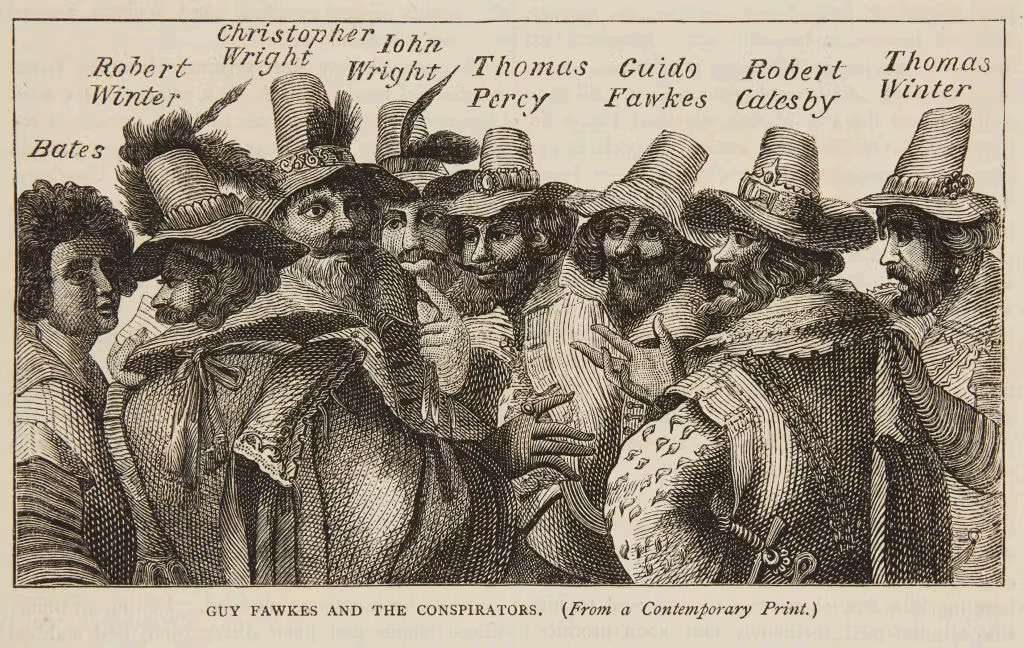
Image credit: Illustration from Old and New London: A Narrative of its History, its People and its Places, Vol II by Walter Thornbury, 1872-8 (Historic Royal Palaces)
More News
Stay up to date with more of our latest news updates.

High Court prefers Single Joint Expert evidence (… again)
Deemster Corlett: in certain cases, "lack of objectivity" evident in rival expert reports

APP fraud/romance scams: Isle of Man remedies
Round-up of Isle of Man law & practice, after Crown Dependencies' joint APP fraud initiative

English High Court refuses to wind up deadlocked Isle of Man company
Petitioner engaged in conduct including "industrial scale lying to the courts" - so winding-up option held to be "unjust and inequitable"