
The Privy Council’s decision to end the ‘Shareholder Rule’ – what does it mean for the Isle of Man?
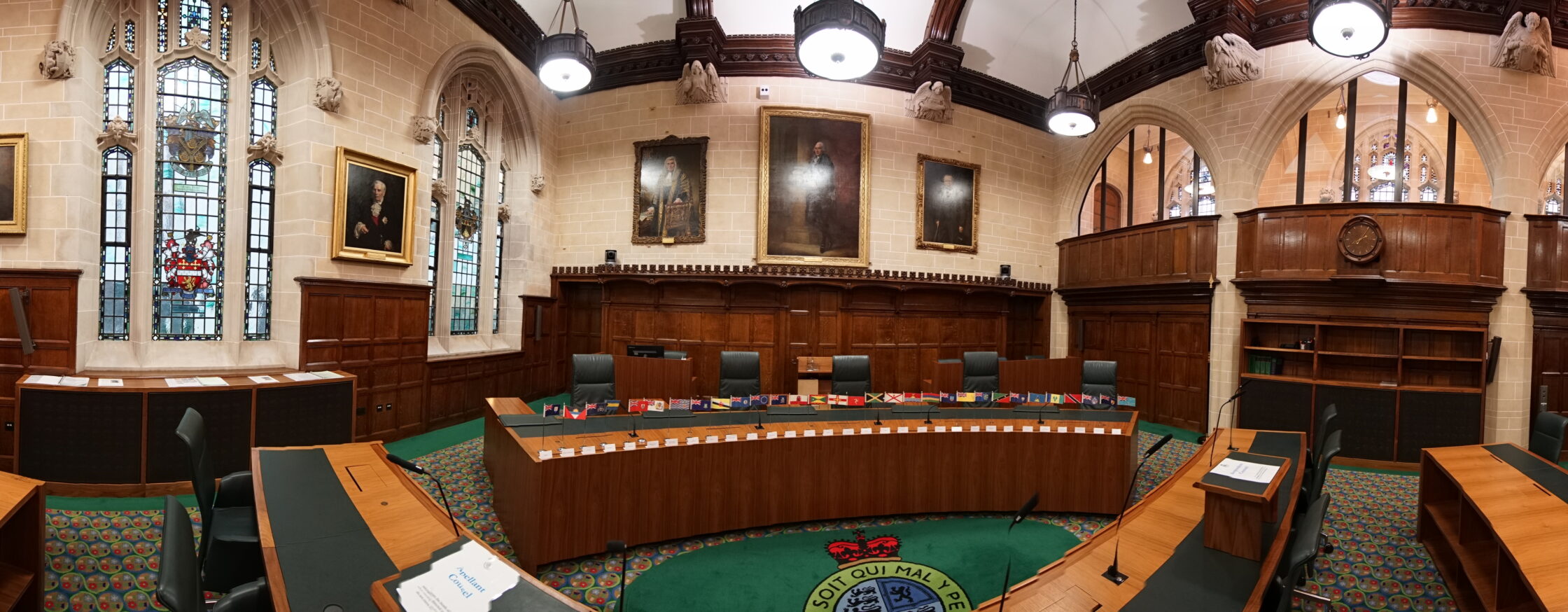
JCPC decision, on appeal from Bermuda, also applied to England & Wales
In Jardine Strategic Ltd v Oasis Investments II Master Fund Ltd & 80 others (No. 2) [2025] UKPC 34 (24.07.25), the JCPC recently held that the ‘Shareholder Rule’ forms no part of the law of Bermuda. It also issued a Willers v Joyce direction (after the Isle of Man related case of that name), meaning that this important decision is now part of the law of England and Wales too.
Under the ‘Shareholder Rule’, as first applied in 1888, a company could not, in the course of litigation between it and shareholders or former shareholders, withhold documents from inspection on the basis that the documents were covered by legal advice privilege. The JCPC described this as a: “rule without justification”, holding (also at § 82): “Like the emperor wearing no clothes in the folktale, it is time to recognise and declare that the Rule is altogether unclothed.” This was because a:
“89… broadly based exception from legal advice privilege as between company and shareholders… would discourage companies from obtaining candid legal advice in confidence. It would ignore the separate personality of the company and it would wrongly assume a simple coincidence of interests contrary to the typical commercial reality.
90. … While of course the desirability that court proceedings should get at the truth means that relevant documents have to be disclosed to a party with no other right to see them, production is normally subject to legal professional privilege. So it is strange that an exception to that same privilege can be mounted on the basis of a special relationship (company and shareholder) when the express contractual terms of that relationship point clearly in the opposite direction.”
The ‘Willers v Joyce’ direction
The Board also issued a so-called Willers v Joyce direction (under which JCPC decisions may become binding in England and Wales).
In Willers v Joyce (No 2) [2016] UKSC 44, [2018] AC 843, Lord Neuberger,* with whom the other Justices agreed, had emphasised the importance of the doctrine of precedent to the coherent clarity and predictability of the law. Referring to Willers v Joyce, Lord Briggs and Lady Rose, in Jardine Strategic, held:
“109. Although the Judicial Committee of the Privy Council is not a court of any part of the United Kingdom, it almost always applies a variant of the common law and either all or most of the Privy Councillors sitting on an appeal will be Justices of the Supreme Court. The logical consequence of this, Lord Neuberger said, was that decisions of the JCPC cannot be binding on any judge of England and Wales but that a decision of the JCPC, at least on a common law issue, should be regarded by courts at every level as being of great weight and persuasive value: see para 12. He summed up the position as follows:
“16. There is no doubt that, unless there is a decision of a superior court to the contrary effect, a court in England and Wales can normally be expected to follow a decision of the JCPC, but there is no question of it being bound to do so as a matter of precedent. There is also no doubt that a court should not, at least normally, follow a decision of the JCPC, if it is inconsistent with the decision of a court which is binding in accordance with the [normal rules of precedent]”…
113. … the members of the Board in the present appeal, all also being Justices of the Supreme Court, are firmly of the view that this decision should be regarded by courts in England and Wales as abrogating the Shareholder Rule for the purpose of litigation in those courts, and the Board so declares.”
* Isle of Man practitioners recall Lord Neuberger sharing insights in his 2013 Caroline Weatherill Memorial lecture: “The Judicial Committee of the Privy Council in the 21st Century Isle of Man”.
What does Jardine Strategic mean for the Isle of Man?
The JCPC’s decision in Jardine Strategic is of significance for the Isle of Man, for several reasons.
First, it is of high persuasive authority, not least on account of the Willers v Joyce direction, expressly applying it beyond Bermuda to England and Wales.
Secondly, it relates to an area of law which has recently arisen in practice here. As recently as October 2023, Deemster Corlett had considered the issue of privilege in minority shareholder oppression claims in Mir Ltd & another v Bader & related claims (ORD 21/0001, ORD 21/0002, ORD 21/0009) (31.10.23) (§§ 39-43).
Deemster Corlett had concluded, at § 40, consistently with a line of authorities, including recent authorities prior to Jardine Strategic, that:
“40… the position is not straightforward. It is well established that a company may have litigation privilege in respect of communications having reference to a dispute between the company on the one hand and a shareholder on the other, but otherwise the company’s communications with lawyers are not privileged as against the shareholder (see Matthews and Malek Disclosure (5th edition) at 11.87). In Re Hydrosan Ltd [1991] BCC 19, Harman J held that a minority shareholder’s petition was not hostile litigation between the petitioner and the company so as to prevent a set of documents being producible on the grounds of privilege. At page 20, lines G-H he said:-
“There is no doubt that matters passing between solicitors to a company and a company are prima facie entitled to be produced to all shareholders of the company….”.
However, at page 21 B-C Harman J said that such a rule does not apply where the company has brought an action against a shareholder. He went on to distinguish between a claim by a creditor to wind-up a company and that by a member of a company for its equitable winding up. As Harman J pointed out, “the wrongs claimed and the nature of the allegations are of wrongs by those in control of the company against a shareholder rather than by the company itself in any real sense”. The law therefore favours disclosure in minority oppression claims and is reluctant to countenance objections on the grounds of privilege.”
On the facts of Mir Ltd, there was also evidence of at least a partial waiver of privilege.
Thirdly, the decision in Jardine Strategic means that if a similar point arose again, and Jardine Strategic is cited to the Court, a Manx Court might very well now take a different view. Jardine Strategic makes it significantly easier for companies to seek legal advice. In the event of a dispute with its shareholders, such as a minority shareholder oppression claim, it is now much less likely than previously that such advice may be ordered to be disclosed or inspected.
Note for practitioners: The JCPC’s decision in Jardine Strategic is likely to be considered of high persuasive authority in the Isle of Man.
Disclaimer: professional advice should be sought before applying any information in a given case.
For advice on Isle of Man civil procedure or litigation relating to Isle of Man company law, contact Coren Law.
See also Coren Law’s Isle of Man civil procedure portal: Click On | Coren Law.
Photo: ChrisVTG Photography
More News
Stay up to date with more of our latest news updates.

High Court gives guidance on foreign law evidence
Evidence specialist Acting Deemster Malek KC sets out relevant principles on foreign law evidence

New DHB & AG appointments
New appointments to roles of Island's Deputy High Bailiff and Attorney General

UK Courts issue Position Statement on Judicial use of AI
New Position Statement will be watched closely by practitioners in the Isle of Man